
The Ultimate 2.4GHz Wireless Guitar System
Introduction to Wireless Guitar Systems
Wireless guitar systems have revolutionized the way musicians perform by providing an unprecedented level of freedom and flexibility. These systems enable players to move around freely on stage without the encumbrance of cables, which can often limit creativity and movement. The incorporation of technology in music has allowed for the development of sophisticated devices that maintain sound quality while eliminating the need for physical connections.
Predominantly, one such technology is the 2.4GHz wireless guitar system rechargeable. This system operates on the 2.4GHz frequency, which is known for its reliability and robust performance in various environments. It allows musicians to transmit audio signals wirelessly from their guitar to an amplifier or audio interface, ensuring that sound integrity is preserved while allowing performers the liberty to engage with their audience and stage surroundings.
The flexibility afforded by wireless guitar systems empowers artists to deliver dynamic performances, whether they are in a small venue or a large concert hall. Musicians can engage with fans, move to various parts of the stage, and project their energy without the risk of tripping over cords or inadvertently disconnecting their equipment. Furthermore, with advancements in technology, such as the arrival of rechargeable options, the 2.4GHz wireless guitar system also addresses concerns regarding battery life and upkeep. This allows musicians to focus on their performance without constant interruptions for battery replacement.
Overall, the evolution of wireless technology in musical instruments signifies a shift toward a more liberated playing experience. Musicians can now fully express themselves through their music, integrating movement and creativity seamlessly, thanks in large part to innovative solutions such as the rechargeable 2.4GHz wireless guitar system.
Features of the 2.4GHz Wireless Guitar System
The 2.4GHz wireless guitar system represents a significant advancement in the world of musical performance, particularly for guitarists seeking greater freedom of movement without sacrificing audio quality. At the heart of this technology is the 2.4GHz frequency band, which offers several key advantages that enhance the user experience. One of the most notable features is the reduction in latency, which is the delay between the moment a note is played and when it is heard. With typical latency levels of just a few milliseconds, guitarists can perform with confidence, knowing their sound is transmitted nearly instantaneously.
Interference is another common challenge faced by musicians utilizing wireless technology. The 2.4GHz wireless guitar system is designed to intelligently manage interference from other devices operating in the same frequency range. By employing advanced frequency-hopping spread spectrum technology, the system can quickly switch channels to avoid interference, ensuring a clean, uninterrupted sound during performances or practice sessions.
Furthermore, the use of digital signal processing in the 2.4GHz wireless guitar system ensures that the audio transmission remains faithful to the original sound. Digital signals are less susceptible to degradation over distance compared to analog signals, resulting in a clearer, more precise audio experience. This capability is particularly beneficial for guitarists performing in diverse settings, from crowded venues to open-air concerts, where maintaining sound quality is paramount.
Finally, the convenience of a rechargeable 2.4GHz wireless guitar system can’t be overlooked. Many models feature long-lasting batteries that allow for several hours of uninterrupted playtime, making them ideal for lengthy performances or recording sessions.
Battery Life and Rechargeability
The battery life of a 2.4GHz wireless guitar system rechargeable is a critical factor for musicians both in practice and performance settings. Typically, these systems are designed to offer extended playtime on a single charge, often ranging between five to eight hours depending on the model and usage conditions. This makes them particularly advantageous for live performances where reliable connectivity is essential.
Rechargeable batteries in these systems usually feature lithium-ion technology, which is known for both efficiency and longevity. Charging times vary, but most systems can fully recharge within one to three hours, allowing musicians to quickly get back to playing without lengthy downtimes. It is advisable to utilize the provided charger to ensure optimal charging and battery health. Overcharging can negatively impact battery life, so adhering to the manufacturer’s guidelines is prudent.
Moreover, to maintain the health of a rechargeable battery in a 2.4GHz wireless guitar system, users should adopt a few best practices. Firstly, avoid letting the battery drain completely before recharging, as this can shorten its lifespan. Instead, aim to recharge when the battery level drops to around 20-30%. Additionally, storing the system in a cool, dry place when not in use can help preserve battery health. Regularly using the system helps maintain its functionality; a battery that is not frequently cycled can degrade faster. Ultimately, attentiveness to these practices can significantly enhance the sustainability of a wireless guitar system’s rechargeable battery.
Transmission Range and Performance
One of the standout features of a 2.4GHz wireless guitar system rechargeable is its impressive transmission range, capable of exceeding 30 meters or 100 feet. This extended range allows musicians the freedom to move around the stage or studio without being tethered to an amplifier or sound source, greatly enhancing performance fluidity. Whether performing in a small venue or a large concert hall, this range provides sufficient flexibility for guitarists to interact with their environment and audience.
In practical terms, the effectiveness of the transmission can be affected by various factors including physical obstacles such as walls, furniture, and other electronic devices that may interfere with the wireless signal. For optimal performance, it is advisable to maintain a direct line of sight between the transmitter and receiver whenever possible. If performing in a densely populated area with many electronic devices, it may be beneficial to perform a signal check to identify potential interference sources.
Additionally, some environments may introduce challenges such as thick walls that can dampen signal strength. In such cases, musicians might consider positioning the receiving unit in a location that minimizes these obstacles, or using reflectors to enhance the signal. Furthermore, when exploring outdoor settings or larger venues, the 2.4GHz wireless guitar system rechargeable remains reliable, yet users should remain cognizant of potential interference from other wireless devices like Wi-Fi routers. By staying informed about the surrounding environment and adjusting the setup accordingly, guitarists can maximize their wireless system’s performance, ensuring seamless and impactful musical presentations.
270° Rotatable Design
The 2.4GHz wireless guitar system rechargeable provides a remarkable 270° rotatable design for both the transmitter and the receiver. This innovative feature is instrumental for musicians who require flexibility and ease of setup, regardless of their performance style or environment. By allowing rotation, this system eliminates the hassle of awkward cable runs and tangled wires, creating a seamless connection between the guitar and the amplifier.
For example, guitarists performing on stage can position the transmitter in a way that is most comfortable for their playing style, especially when navigating varied stage setups. Whether standing or sitting, the ability to rotate the transmitter by up to 270 degrees makes it easier to manage the connections without impeding movement or playability. Additionally, the use of a 2.4GHz frequency ensures a strong and stable signal, further enhancing the performance experience.
Moreover, in studio settings, the rotatable design can be just as advantageous. When a guitarist needs to reposition their equipment for recording, the freedom to adjust the transmitter’s angle can lead to a more efficient and effective workflow. This flexibility allows musicians to focus on their art rather than handle cumbersome equipment. Overall, the 270° rotatable feature adds significant value to the 2.4GHz wireless guitar system rechargeable, making it an attractive choice for both live performances and studio recordings. With such adaptability, musicians of all levels can maintain their focus on creativity and expression while enjoying the functional benefits of this wireless system.
Compatibility with Different Instruments
The 2.4GHz wireless guitar system has gained popularity not only among guitarists but also among musicians using various string instruments. Its versatility and reliable performance make it suitable for electric guitars, basses, and even some acoustic-electric models. Understanding the compatibility of this system can enhance the overall experience for performers.
For electric guitars, the 2.4GHz wireless guitar system rechargeable can be seamlessly integrated. Most electric guitars come equipped with a standard output jack, allowing for easy connection to the transmitter. This straightforward setup ensures that players can enjoy the freedom of wireless performance without the clutter of cables.
Basses typically present similar compatibility, often featuring a standard 1/4 inch output. Therefore, musicians playing bass guitar can incorporate a 2.4GHz wireless system effortlessly. In some cases, certain bass models with unique output configurations may require an adapter to properly connect the wireless transmitter.
In addition to electric guitars and basses, the compatibility extends to other electric string instruments, such as synthesizer guitars or electric violins, provided they utilize the standard jack outputs. This feature widens the appeal of the 2.4GHz wireless guitar system to a broader range of musicians.
For those using acoustic guitars that have been equipped with pickups, this wireless system can also be utilized, assuming the pickup is compatible with a quarter-inch jack. Musicians transitioning from a wired setup to a wireless system can set up with minimal effort by following the instructions provided by the manufacturer regarding pairing the transmitter and receiver.
In conclusion, the 2.4GHz wireless guitar system rechargeable represents a practical solution for various string instruments. With its compatibility and simplicity, players can take full advantage of wireless technology, enhancing their performance without compromising quality.
Setting Up the Wireless System
Setting up a 2.4GHz wireless guitar system rechargeable device can be a straightforward process if followed step-by-step. Start by ensuring that all components are present and fully charged. This includes the transmitter, receiver, and any necessary cables. To begin, locate the power buttons on both the transmitter and receiver.
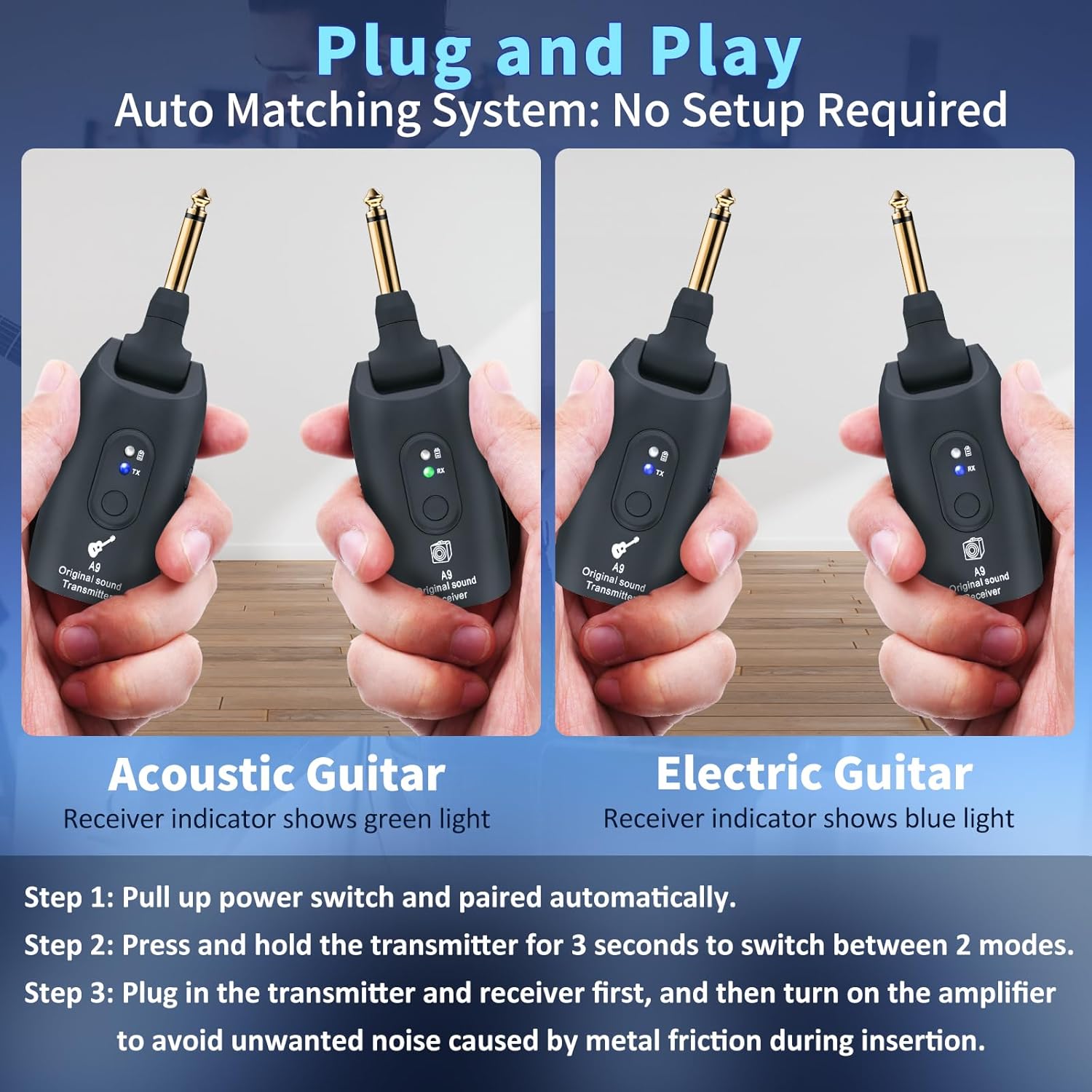
First, power on the receiver by connecting it to your amplifier or audio interface using the appropriate cable. Typically, this will be a 1/4 inch jack for electric guitars. Once connected, turn on the receiver. Next, prepare the transmitter. Plug the transmitter into the output jack of your guitar securely, ensuring a snug fit to avoid any disconnect during use. Once the transmitter is in place, power it on, as this initiates the connection process.
Many 2.4GHz wireless guitar systems come with an automatic channel selection feature, allowing them to find the best available frequency. If your system is equipped with this feature, it will synchronize both components, and you should see a light indicator confirming the connection. In some cases, manual pairing is required; consult the user manual for instructions on how to select channels manually.
If you encounter any connection issues, start troubleshooting by checking the battery levels on both the transmitter and receiver. Ensure they are adequately charged, as low battery levels can affect performance. Additionally, confirm that the system’s range is respected. Typically, 2.4GHz systems operate best within a 30-meter range, free of barriers. Should problems persist, try resetting the devices to factory settings, following the manufacturer’s instructions.
Finally, after confirming a stable connection, you should perform a sound check by playing your guitar and adjusting the volume levels. This ensures that your wireless system is functioning optimally, providing you with the freedom and flexibility needed during your performance.
Pros and Cons of Wireless Systems
Wireless guitar systems have increasingly become a favored choice among musicians due to their convenience and flexibility. One of the primary advantages of a 2.4GHz wireless guitar system rechargeable is the freedom of movement it provides. Musicians can roam the stage without the worry of tripping over cables, which enhances performance dynamics. Additionally, modern wireless systems offer high-quality audio transmission with minimal latency, ensuring that sound remains consistent, comparable to traditional wired setups.
Another significant benefit is the convenience of setup. With a wireless guitar system, musicians can save valuable time during rehearsals and performances. Many models, such as the 2.4GHz wireless guitar system rechargeable, come equipped with rechargeable batteries, reducing the need for constant replacements and facilitating longer playing times without interruption. This feature makes them particularly attractive for larger gigs or tours.
However, wireless systems are not without their drawbacks. One notable con is the potential for interference. In crowded venues or areas with many electronic signals, the transmission can experience disruption, leading to audio dropouts. Musicians relying on wireless technology must be mindful of their surroundings and may need to perform frequency scans before shows to ensure optimal performance.
Moreover, while wireless systems have improved over the years, budget-friendly models may still exhibit poor sound quality or increased latency when compared to high-end wired options. For studio recordings, where pristine audio fidelity is crucial, traditional wired setups may still be preferred for their reliability and consistency.
Ultimately, the choice between wireless and wired systems will depend on the specific needs of musicians. For those who prioritize mobility and ease during live performances, a 2.4GHz wireless guitar system rechargeable may be the preferred choice, while others may opt for traditional setups to ensure the highest audio quality in controlled environments.
Conclusion and Final Thoughts
In today’s music world, having a reliable guitar system is essential for both amateur and professional musicians. The 2.4GHz wireless guitar system rechargeable offers significant advantages over traditional wired systems. With advanced technology and professional quality, this system provides clear sound transmission, excellent range, and minimal latency, which are crucial for live performances and studio recordings alike.
One of the key benefits of the 2.4GHz wireless guitar system is its ease of use. The rechargeable feature allows for extended playtime without the constant need for battery replacements, making it a convenient option for musicians on the go. Furthermore, the compact design ensures that transporting the system is hassle-free, especially for artists who travel frequently. The plug-and-play functionality further enhances user experience by allowing for straightforward setup and operation.
When considering a wireless guitar system, investing in a high-quality product like the 2.4GHz model not only enhances performance but also elevates the overall playing experience. Musicians can enjoy the freedom of movement on stage while still delivering high-quality sound to their audience. Additionally, with the market offering various models catering to differing performance needs, it is important to assess personal requirements before making a purchase.
By choosing a wireless system that matches one’s style and needs, players can unlock their full potential, allowing for more creativity and expression in their performances. Therefore, if you’re in the market for an upgrade or are venturing into wireless technology for the first time, the 2.4GHz wireless guitar system rechargeable is undoubtedly worth considering.
As an Amazon Associate I earn from qualifying purchases.
Take a closer look