
Finding Your Tone With a Stratocaster
As an Amazon Associate, we may earn from qualifying purchases. This comes at no extra cost to you and helps support our website.
The Moment a Guitar Starts Holding Your Sound Back
Every guitarist hits a point where the instrument in their hands feels like it’s working against the sound in their head. You dial in an amp, adjust the pickups, mess with pedal settings, and something still feels slightly off — not broken, just limited. More often than not, that ceiling isn’t about skill. It’s about the guitar itself, and whether it actually has the tonal range to follow you where you’re trying to go.
That’s usually the moment players start looking past their first or second guitar toward something built with more tonal flexibility in mind. Not necessarily a guitar for a specific genre, but one that can move between them — clean and glassy one moment, gritty and pushed the next — without feeling like it’s fighting you the whole way.
It tends to show up in small, specific frustrations rather than one big realization. Maybe it’s noticing that your cleans sound thin next to a bandmate’s, or that a favorite riff never quite has the sustain you hear on the original recording. None of that means you’re doing anything wrong — it’s usually just the instrument reaching the edge of what it was built to do.
Why the Body and Wood Choice Shape More Than Looks
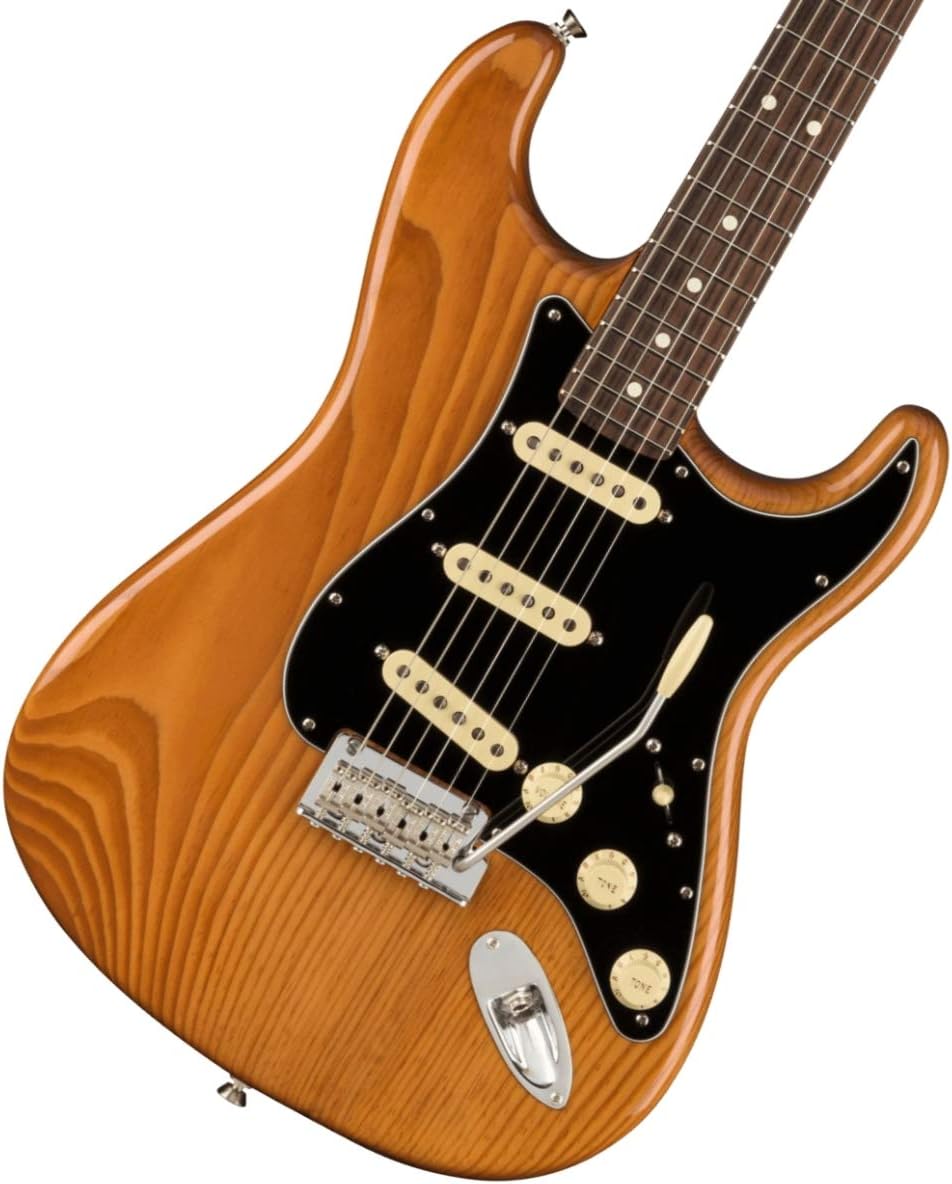
It’s easy to think of a guitar’s wood as mostly cosmetic, but the body material plays a real role in how a guitar responds and sustains. The American Professional II Stratocaster uses a roasted pine body, which tends to bring a warmth and openness to the tone that pairs well with the classic Stratocaster brightness rather than fighting against it. Paired with a maple neck and rosewood fingerboard, the combination leans toward a smooth, balanced feel under the fingers — not too sharp, not too dark.
This matters more in practice than it might sound on paper. A guitar that resonates well acoustically, even unplugged, tends to translate that same responsiveness once it’s plugged in. You feel it in how notes bloom and sustain, and in how forgiving the instrument is when you’re experimenting with dynamics — playing softly one moment, digging in the next.
It’s also the kind of thing that becomes more noticeable the longer you play a guitar, rather than less. A lot of the tonal character that matters for songwriting and recording only reveals itself after weeks of sitting with an instrument — noticing how a chord rings out during a quiet verse, or how a note sustains just long enough to lead into the next phrase without feeling clipped short.
Three Single-Coils, a Wide Range of Directions
The Stratocaster’s three single-coil pickup configuration is part of what’s made the design a go-to for so many different styles of playing over the decades. Single-coils have a character that’s distinct from humbuckers — a bit brighter, a bit more detailed, with a certain bite that comes through especially well on clean and lightly overdriven tones. That’s part of why the Stratocaster sound shows up everywhere from blues and funk to indie rock and country, often within the same song.
Having three pickups, rather than one or two, opens up more combinations to explore — a bridge pickup for cutting through a mix, a neck pickup for something warmer and rounder, or one of the in-between positions for that slightly hollow, quacky tone Stratocasters are known for. For a player who likes to experiment rather than settle on one fixed sound, that range becomes less about specs and more about creative options sitting right there under your picking hand.
In a practice setting, that range can change how a session unfolds. Working through a chord progression on the neck pickup might feel warm and laid-back, almost like it’s asking for a slower tempo, while flipping to the bridge pickup on the same chords can push the same idea somewhere more urgent and energetic. That kind of shift, available with a simple flick of the switch, is often what turns a routine practice session into one where a new idea actually takes shape.
A Neck Built to Disappear Under Your Hands
Tone matters, but so does how a guitar actually feels to play for long stretches — during a practice session that runs longer than planned, or a rehearsal that keeps going because the songs are finally clicking. The maple neck and rosewood fingerboard combination is a longstanding pairing for a reason: it tends to offer a smooth, familiar feel that doesn’t call attention to itself, which is exactly what you want when you’re trying to stay focused on the music rather than fighting the instrument.
A 25.5-inch scale length also affects string tension and feel, contributing to that classic Stratocaster snap and definition, particularly when bending notes or playing with a lighter touch. For players moving between rhythm and lead within the same song, having a neck that stays comfortable and consistent across the fretboard makes those transitions feel more natural.
That consistency ends up mattering most during longer rehearsals or writing sessions, when hand fatigue can quietly start affecting timing and phrasing without you even noticing at first. A neck profile that feels familiar from the first fret to the twelfth makes it easier to stay locked into a groove, rather than adjusting your grip or technique as you move up and down the neck.
The Tremolo Bridge and a Little Room to Move
A tremolo bridge adds an expressive layer that a fixed bridge simply doesn’t offer — subtle pitch bends, vibrato, or more dramatic dive effects, depending on how it’s used. For players who like to add texture and movement to their playing, rather than sticking to strictly fretted notes, having that option built in opens up another dimension of expression without needing a separate effect or pedal to get there.
It’s the kind of feature that might not get used in every song, but when the right moment calls for it — a swelling chord, an expressive slide into a note — it’s there, ready, rather than something you have to work around.
Some players use it constantly as part of their phrasing, weaving subtle wobble into sustained notes almost without thinking about it. Others reach for it more sparingly, saving a deeper dive for a specific moment in a song where it adds real impact. Either approach works, and having the bridge built into the guitar means that choice is always available rather than something you’d need to plan around in advance.
A Balanced Sound Profile Across Different Styles
One of the more practical benefits of a guitar built around a balanced sound profile is that it doesn’t push you toward one genre at the expense of others. A guitar that’s voiced heavily toward one style can start to feel limiting once your playing evolves or your taste shifts. A more balanced tonal foundation, like what this Stratocaster is built around, tends to adapt more easily — clean tones for jazz-influenced playing, midrange grit for rock, and enough clarity for intricate fingerstyle or funk rhythm work.
This kind of flexibility becomes especially useful for players who don’t stick to a single genre, or who are still figuring out where their sound is headed. Instead of being boxed in, the guitar leaves room for that exploration to happen naturally, session by session.
It also holds up well as a player’s taste changes over the years. A guitar voiced narrowly toward one style can feel like a mismatch once your influences shift, forcing a decision between adapting your playing to the instrument or looking for something new. A more balanced starting point sidesteps that problem, since it was never built around chasing one specific sound in the first place.
Letting Tone Lead You Toward New Musical Ideas
There’s a specific kind of creativity that comes from simply switching pickup positions or adjusting your picking dynamics and stumbling onto something you weren’t expecting. A riff that sounds ordinary on one pickup setting can suddenly feel entirely different on another — sparking a new song idea, a different arrangement, or just a more interesting way to play a part you already know.
Guitars with a wider tonal palette tend to encourage this kind of exploration more than guitars with a single, fixed character. It’s less about chasing a specific tone and more about having enough range available that experimentation stays interesting, even after months or years of playing the same instrument.
Whether You’re Playing Alone, With a Band, or in a Home Studio
The situations where a guitar like this gets used tend to vary a lot. Some nights it might be a quiet solo session working through chord ideas at home. Other times it’s plugged into a full band rehearsal, where cutting through a dense mix with a clear, articulate tone matters more than anything else. And for anyone recording at home, having a guitar that can cover multiple tonal roles — rhythm, lead, clean textures — without switching instruments mid-session makes the whole process smoother.
That kind of versatility reduces one of the more common frustrations musicians run into: reaching for a different guitar because the one in your hands can’t quite get the tone a part needs. When one instrument can reasonably cover that range, it simplifies both practice and recording, and keeps momentum going instead of interrupting it.
Where This Guitar Fits Into Your Playing
A guitar like the American Professional II Stratocaster tends to suit players who are past their very first instrument and looking for something with enough tonal depth to grow alongside their playing, rather than something they’ll outgrow in a year. It fits naturally into a lot of different musical lives — the bedroom songwriter piecing together new ideas, the gigging musician who needs one guitar to cover several tones in a single set, or the home recording enthusiast layering different parts into a track.
Ultimately, it’s less about any single feature and more about how those features work together to give a player room to explore — tonally, stylistically, and creatively — without the instrument getting in the way of where the music wants to go.
As an Amazon Associate I earn from qualifying purchases.
Take a closer look