
Fender Stratocaster: A Classic Electric Guitar Choice
As an Amazon Associate I earn from qualifying purchases.
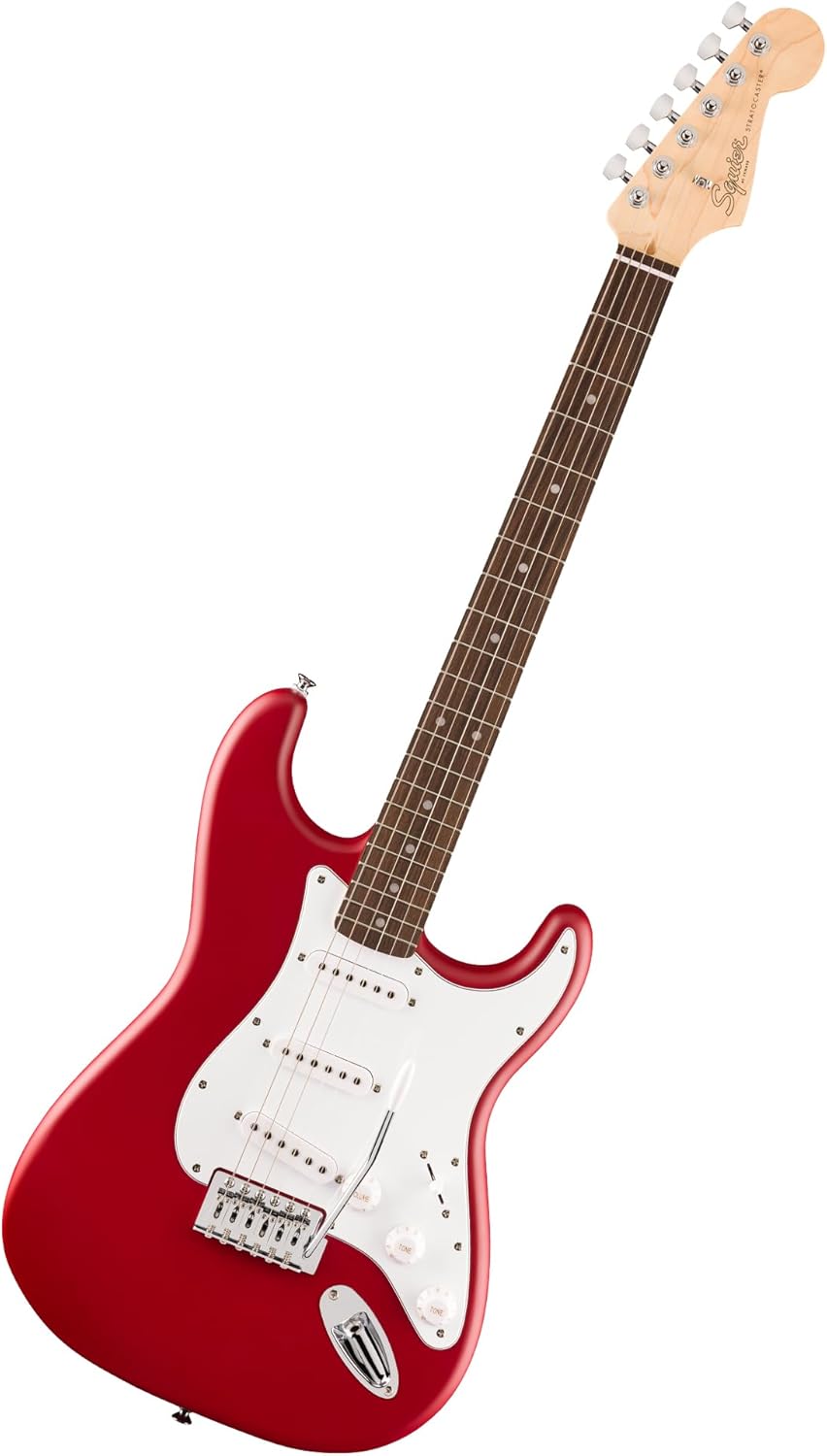
The Fender Stratocaster is one of those guitars that needs very little introduction. Its double-cutaway body, three-pickup layout and unmistakable silhouette have been part of electric-guitar culture for decades, appearing in everything from blues and pop to rock, funk and indie music.
What makes a Stratocaster particularly appealing is its versatility. It is the sort of guitar that can sit comfortably in a first serious setup, a home studio or alongside several other instruments in an experienced player’s collection. The design feels familiar in the hands, the controls are straightforward, and the wide range of available tones makes it easy to move between clean rhythm playing, brighter lead sounds and more driven amplifier settings.
There is also something pleasingly uncomplicated about the Stratocaster shape itself. The contoured body is designed to sit closely against the player rather than feeling like a heavy slab of timber, while the long upper horn helps the guitar balance naturally when played standing up. It is a practical design as much as an iconic one, which is a large part of why it has remained relevant for so long.
Why it works as an everyday electric guitar
The Stratocaster has always been easy to understand because so much of its appeal comes from a well-balanced design rather than one standout trick. The double-cutaway body gives comfortable access further up the neck, while the familiar control layout keeps everything close to hand without making the guitar feel cluttered.
Its pickup arrangement is a big part of that flexibility. A Strat-style three-pickup setup gives you access to brighter, sharper sounds as well as smoother and more rounded tones, so the guitar can cover a surprising amount of ground without needing to be heavily modified.
That makes it particularly useful for players who move between different styles. Clean chords can sound open and articulate, funkier rhythm parts benefit from the Stratocaster’s naturally crisp character, and with more gain it can still deliver convincing rock and blues tones.
The body shape also deserves some credit. The curves and contours make it feel less blocky against the ribs and forearm than many flatter-bodied guitars. Over a longer practice session, that physical comfort matters just as much as the sound.
For a guitarist who wants one instrument that can handle lessons, home practice, rehearsals and recording without feeling overly specialised, the Stratocaster format remains a very sensible choice.
What it feels like to use
A Stratocaster tends to feel immediately familiar in the hands. The body sits close against you, the rounded contours soften the contact points around your forearm and ribs, and the double-cutaway shape keeps the upper frets easy to reach.
The neck position and overall balance also make it comfortable whether you are sitting down to practise or playing with a strap. It does not feel especially bulky, and that lighter, more streamlined shape can make longer playing sessions easier on the shoulders than some heavier solid-body designs.
The controls are positioned where you can reach them quickly, which is useful when switching sounds mid-song. The five-way selector gives the guitar much of its tonal personality, letting you move from bright, cutting tones to softer and more rounded combinations without touching an amp or pedal.
There is a slightly lively, responsive character to a Stratocaster as well. Pick lightly and it can sound clean and delicate; dig in harder and it reacts with more bite. That makes it satisfying for players who like a guitar to respond clearly to changes in picking strength and technique.
The drawbacks
The Stratocaster design is wonderfully versatile, but that versatility does come with a few compromises. Players who want a very thick, heavy sound straight from the guitar may find the traditional Strat-style pickup character a little leaner and brighter than a guitar fitted with humbuckers.
The control layout can also take a little getting used to. The volume knob sits quite close to the picking hand, and some players accidentally knock it while strumming aggressively. Others like having the controls so accessible, so this is very much a matter of playing style.
The tremolo system is another area worth mentioning. It adds expressive possibilities, but it can also introduce a little more setup and tuning sensitivity than a simple fixed bridge. Players who rarely use a tremolo may prefer the simplicity of a hardtail-style guitar.
There is also the fact that the Stratocaster has such a distinctive sound and feel. That is part of its charm, but it means it will not suit everyone. If you prefer a heavier body, a thicker neck feel or a darker, more compressed tone, another style of electric guitar may feel more natural.
None of these points make the Stratocaster a poor choice. They simply highlight that its strengths are built around comfort, clarity and versatility rather than maximum weight or aggression.
Who it suits best
This Fender Stratocaster makes the most sense for players who want one electric guitar capable of covering plenty of musical ground. It is particularly well suited to blues, pop, indie, funk, classic rock and cleaner styles where note definition and a lively response matter.
It can also be a sensible step-up guitar for someone moving beyond a very basic starter instrument. The familiar Stratocaster layout gives you room to develop your technique without forcing you into one narrow sound or playing style.
More experienced players may appreciate it for exactly the opposite reason. A Stratocaster is a useful guitar to keep around because it has such a recognisable feel and tonal character. It can slot neatly into a home studio, rehearsal setup or larger collection without duplicating what a heavier humbucker-equipped guitar already does.
Players who value comfort should find plenty to like as well. The sculpted body feels smooth against the torso and forearm, while the overall shape is slim enough to avoid feeling cumbersome during longer sessions.
If you want a guitar that encourages experimentation rather than locking you into one type of music, this is where the Stratocaster earns its place.
Is it worth the guitar rack space?
For many players, yes. The Fender Stratocaster earns its place by being useful rather than merely iconic. It is comfortable to hold, easy to understand, and flexible enough to move between clean practice tones, bluesy lead work, brighter rhythm parts and more driven rock sounds without feeling out of place.
That versatility is what makes it such a dependable choice for a home setup. If you only have room for one or two electric guitars, a Stratocaster covers a lot of territory without demanding a particularly specialised playing style. If you already own several guitars, it still brings a distinct feel and response that is difficult to duplicate with heavier, humbucker-led designs.
The main question is whether you actually like the Stratocaster character. Its brighter response, tremolo system and familiar control layout will suit some players immediately and leave others wanting something thicker or simpler.
If that classic Fender feel appeals to you, though, this is the sort of guitar that can remain useful for years rather than becoming something you quickly outgrow.
As an Amazon Associate I earn from qualifying purchases.
Take a closer look