
Discover the Stagg SES-55 Left-Handed Guitar
As an Amazon Associate I earn from qualifying purchases.
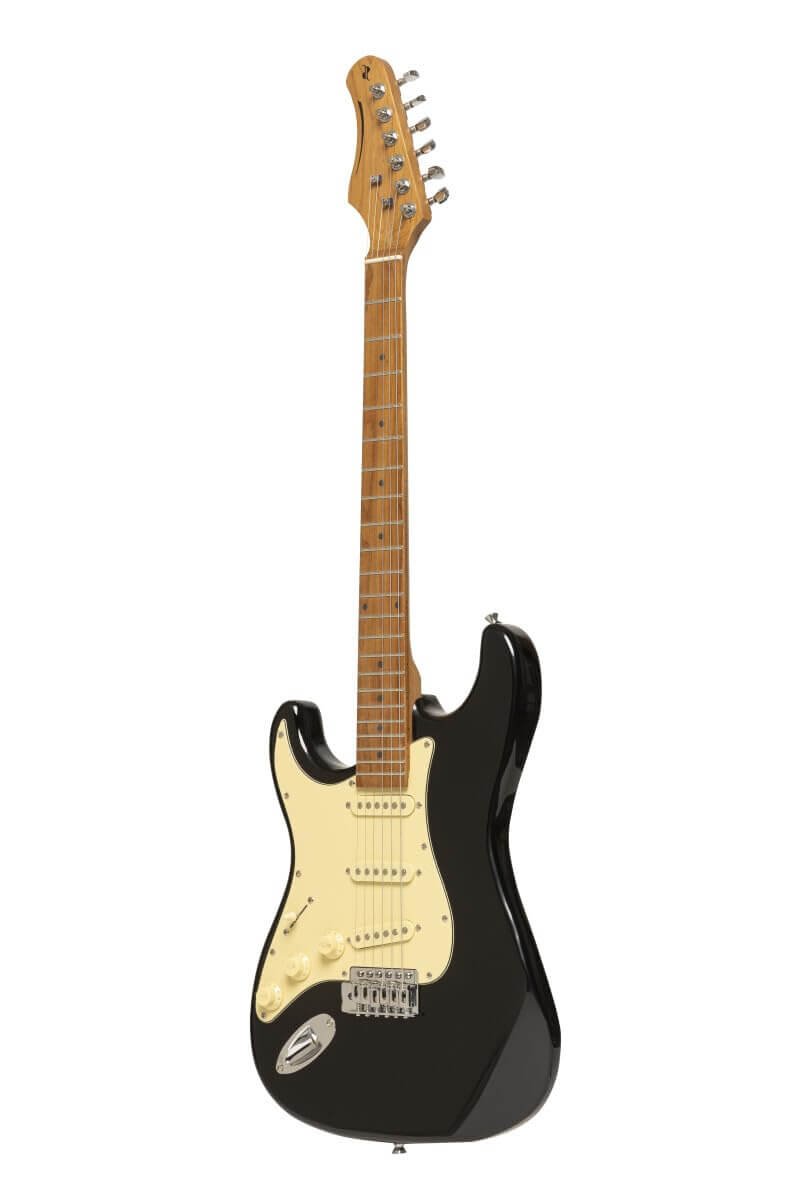
The Stagg SES-55 Left-Handed Electric Guitar gives left-handed players a familiar three-single-coil electric-guitar layout without trying to complicate the formula.
It uses a solid paulownia body with a tempered maple neck and maple fingerboard, while three Alnico single-coil pickups and a five-way selector provide the sort of bright, clear sounds associated with this style of guitar.
For a left-handed player looking for an everyday electric for practice, learning songs and experimenting with different clean and driven tones, the SES-55 offers a straightforward specification that is easy to understand.
Why it works for left-handed players
Left-handed guitarists simply have fewer instruments to choose from, particularly when looking beyond the most common entry-level models.
The SES-55 BLK LH is a genuine left-handed version rather than a right-handed instrument adapted for left-handed use. The controls, bridge and body orientation are all positioned appropriately for a left-handed player.
The body is made from solid paulownia. Paulownia is relatively light compared with many traditional electric-guitar timbers, which can make a guitar of this style feel less burdensome during longer practice sessions.
Stagg pairs that body with a bolt-on tempered maple neck finished in satin. The 25.5-inch scale is a familiar full-size electric-guitar length, while the 12-inch fingerboard radius provides a relatively flat playing surface.
There are 22 frets on the maple fingerboard, and Stagg has shaped the neck joint area to improve access towards the higher frets.
What it feels like to play
The satin-finished maple neck should feel quite different from a heavily glossed neck.
Rather than having that slick, almost sticky surface that can develop under a warm hand, satin tends to feel drier and less intrusive. For regular practice, that can make moving up and down the neck feel more natural.
The 42mm measurement at the first fret keeps the neck from becoming excessively broad, while the 12-inch radius gives the fingerboard a flatter feel than many vintage-style electric guitars.
That combination should suit chord work while still giving enough room for single-note playing, bends and basic lead work.
The body shape is familiar and practical. It sits comfortably against the player when seated, while the double-cutaway outline gives good access to the upper part of the neck.
Because paulownia is a comparatively lightweight wood, the guitar should also feel easier to hold for longer periods than some heavier solid-body instruments.
Three single-coil pickups
The SES-55 uses three Alnico single-coil pickups with a five-way selector switch. Stagg pairs them with one master volume and two tone controls.
That arrangement gives the guitar a useful range of sounds without making the controls difficult to understand.
The neck pickup can provide a rounder, warmer sound for chords and smoother lead playing. The bridge pickup naturally has a brighter, sharper character, while the intermediate selector positions combine pickups for different textures.
For a newer guitarist, this is useful because it allows quite a lot of tonal experimentation without requiring pedals or complicated electronics.
Single-coil pickups also tend to preserve pick attack and note definition well, which can make them particularly satisfying for clean chords, rhythm playing, blues, pop and lighter rock sounds.
Vintage-style vibrato
Stagg fits the SES-55 with a vintage-style vibrato bridge.
This allows the player to introduce pitch movement using the vibrato arm rather than relying entirely on finger vibrato or string bends.
For subtle movement and occasional chord shimmer, this type of bridge can be enjoyable to use.
The guitar also has die-cast nickel machine heads and a bone nut, both sensible details on an instrument designed for regular playing.
The drawbacks
The SES-55 follows a traditional three-single-coil formula, and that brings some limitations along with its versatility.
Single-coil pickups can produce electrical hum, particularly when higher-gain amplifier settings are used. That is normal for this style of pickup rather than necessarily being a fault with the guitar, but somebody mainly interested in heavier rock or metal may prefer the thicker output and reduced hum of a humbucker-equipped instrument.
The bridge pickup can also sound quite bright. Some players love that sharp attack, particularly for rhythm work, while others may find it thin when played completely clean. Using the tone controls or an amplifier with suitable EQ can help, but the basic single-coil character remains part of the guitar.
The vintage-style vibrato deserves consideration too.
A moving bridge introduces more variables than a fixed bridge. If it is used aggressively, tuning stability can depend on the setup, string condition and how smoothly the nut allows the strings to move.
A beginner who has no interest in vibrato may actually prefer a fixed-bridge guitar simply because there is less to adjust.
The guitar may also benefit from a setup after delivery.
Neck relief, string height and intonation can all affect how comfortable an electric guitar feels. Instruments shipped through warehouses and delivery networks can experience temperature and humidity changes, so it is worth checking the setup rather than assuming that every example will arrive perfectly adjusted.
Paulownia is another point worth understanding.
Its light weight is useful, but it is a relatively soft wood compared with some heavier body materials. Someone who is rough with instruments may find that knocks and dents show more readily over time.
The styling is also very traditional. If you already own another three-single-coil electric with a similar body shape, the SES-55 may not add a dramatically different sound to the collection.
And while the guitar provides plenty of tonal variety for clean, blues, pop and general rock playing, somebody whose main aim is heavily saturated high-gain music may be better served by a guitar designed around humbuckers.
There is also the usual left-handed consideration: accessories, replacement parts and the opportunity to try the exact model locally may be more limited than for the equivalent right-handed guitar.
None of those drawbacks makes the SES-55 unsuitable. They simply define the kind of player it is most likely to satisfy.
Who it suits best
The Stagg SES-55 makes most sense for a left-handed guitarist who wants a versatile electric without complicated electronics.
It should work particularly well for beginners learning chords, scales and their first lead parts, because the controls are familiar and easy to understand.
It could also suit a more experienced left-handed player wanting a lightweight everyday guitar for home practice.
The three Alnico single coils make it particularly natural for blues, pop, indie, classic rock, funk and cleaner styles where clarity and pick attack matter.
Is it worth the guitar space?
The Stagg SES-55 Left-Handed Electric Guitar sticks to a well-established formula and gives left-handed players access to it without unnecessary complication.
The solid paulownia body keeps the construction straightforward, the satin maple neck should feel comfortable for regular playing, and the three Alnico single-coil pickups provide enough tonal variation for a wide range of music.
It will not be the natural choice for someone wanting powerful humbuckers or a fixed bridge, and the vibrato system may need a little more attention to setup and tuning.
But for a left-handed guitarist who wants a familiar, flexible electric guitar for everyday playing, the SES-55 has a clear and useful place.
Explore more electric guitars in our Electric Guitars section.
As an Amazon Associate I earn from qualifying purchases.