
Ibanez GIO GSR200 Bass Guitar
As an Amazon Associate I earn from qualifying purchases.
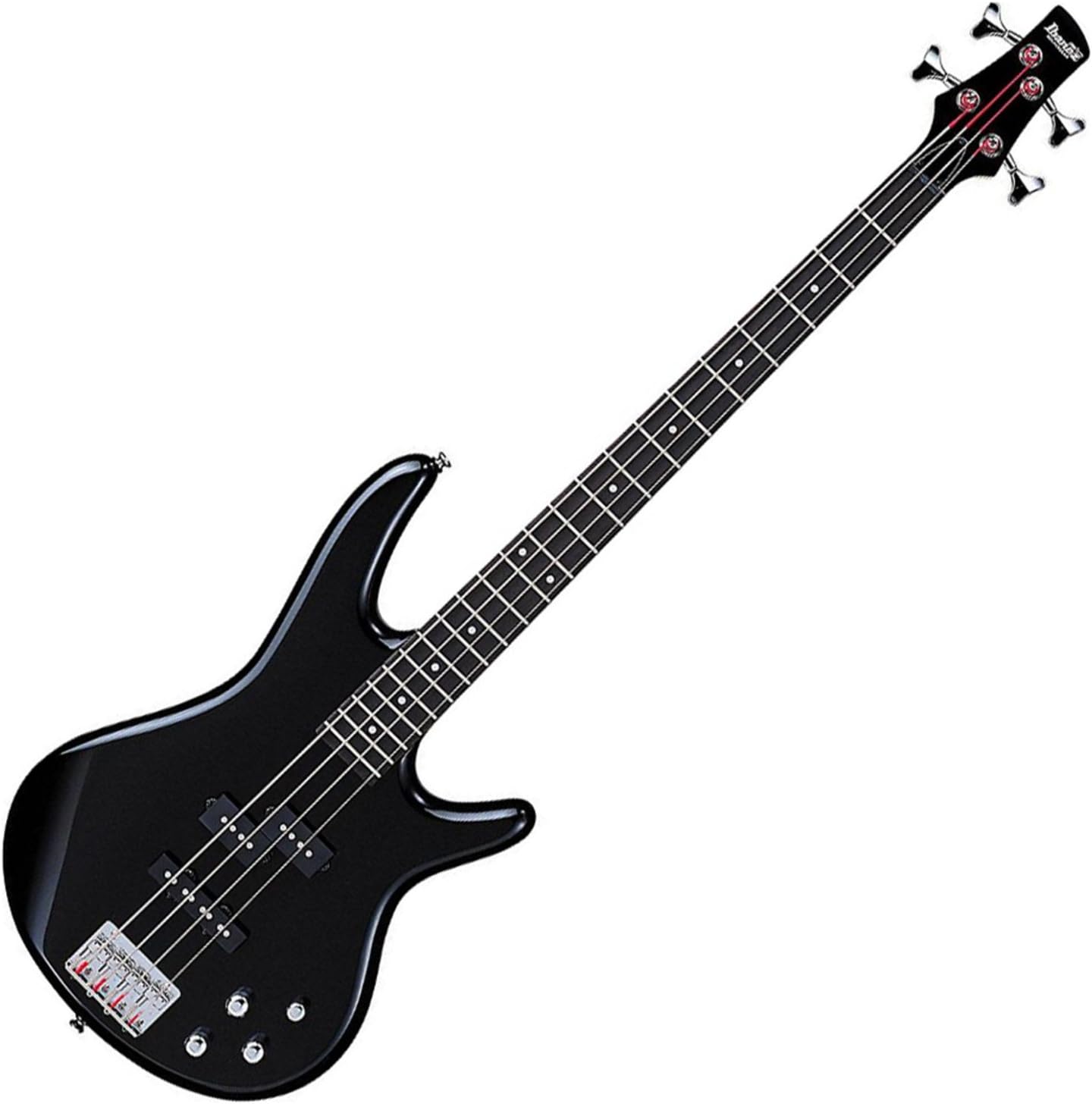
The Ibanez GIO GSR200 Bass Guitar is built around a familiar four-string layout, but the combination of P- and J-style pickups gives it more tonal flexibility than a single-pickup bass.
Its full 34-inch scale keeps the feel firmly in traditional bass territory, while the maple neck and relatively slim 41mm nut width give the instrument a narrower, more manageable feel in the left hand than some chunkier bass designs.
For someone learning bass, recording at home, or simply wanting an uncomplicated instrument that can cover several styles, the GSR200 has a useful balance of simplicity and adjustment.
Why it works as an everyday bass
The pickup layout is one of the strongest parts of the GSR200.
Ibanez uses a passive Dynamix P pickup at the neck and a passive Dynamix J pickup at the bridge. Each pickup has its own volume control, so you can blend them rather than being limited to a simple selector switch.
The neck pickup gives the bass a fuller, rounder foundation that works naturally for rock, pop, blues and general rhythm playing.
Bring more of the bridge pickup into the mix and the sound becomes tighter and more defined, which can be useful when you want individual notes to cut through more clearly.
There is also a conventional tone control, so the top end can be softened without changing the pickup balance.
That makes the control layout easy to understand while still giving enough variation to explore different sounds.
What it feels like to play
The GSR200 uses a full 34-inch scale, so it feels like a proper long-scale bass rather than a compact short-scale instrument.
The maple neck measures around 41mm at the nut, widening to 62mm by the 22nd fret, with a 305mm fingerboard radius.
In practical terms, the neck feels relatively slim and straightforward rather than broad and club-like.
That can be reassuring for someone moving from six-string guitar to bass because the neck does not feel excessively wide in the hand.
The 22 medium frets provide plenty of range for everyday bass playing, and the Jatoba fingerboard has a smooth, dense feel beneath the fingertips rather than the dry, open grain you sometimes get on softer fingerboard woods.
The body shape is also comfortably contoured, so the bass sits naturally against the body whether played standing or seated.
The Phat II bass boost
The GSR200 adds one active feature to an otherwise straightforward passive pickup system.
Ibanez calls it Phat II EQ, and its purpose is to add extra low-end weight when needed.
That gives the bass a little more flexibility than relying solely on pickup balance and passive tone.
For example, a cleaner practice sound can be left fairly neutral, while the Phat II control can add more low-end presence when the bass needs to feel thicker through an amplifier or recording setup.
It is not a complicated multi-band active EQ with several knobs to learn.
Instead, it is a single additional control that lets you push the bass response without completely changing the character of the instrument.
A practical bridge and straightforward setup
The B10 bridge provides individual saddle adjustment for intonation and string height. Ibanez also uses 19mm string spacing, giving the right hand a fairly conventional amount of room across the strings.
That spacing should feel natural whether you play with fingers or a pick.
The factory string gauge is .045 to .100, which is a common four-string bass setup and gives the instrument a familiar balance between flexibility and tension.
There is nothing particularly exotic about the hardware, and that is part of the appeal.
The GSR200 is designed to be played rather than constantly adjusted.
The drawbacks
The first consideration is that this is still a full-scale 34-inch bass.
That gives it the traditional feel many players want, but it also means a longer reach between lower frets than on a short-scale model.
A younger player, someone with a very small frame, or anyone who struggles with long stretches may find a shorter-scale bass physically easier.
The active Phat II circuit also means there is a battery to think about.
The main pickups are passive, so the bass itself is not dependent on active electronics for its basic sound, but the Phat II bass boost does require power.
That means it is worth keeping a spare battery available rather than discovering halfway through a session that the boost circuit has stopped working.
The pickup layout is versatile, but it has a definite P/J character.
Players who want the aggressive punch of a large humbucker, or the very clean modern sound of a fully active two-pickup bass, may find the GSR200 less specialised than they would like.
Its strength is covering a broad middle ground rather than producing one extreme signature sound.
The body material is another point worth understanding.
The black GSR200-BK currently uses a poplar body, which helps keep the instrument practical and relatively light, but players specifically looking for traditional alder, ash or mahogany construction may prefer another model.
The Jatoba fingerboard also feels different from rosewood.
It is hard and smooth, with a slightly firmer feel under the fingers. Some players will barely notice the difference; others have strong preferences about fingerboard material.
The controls are simple, but four knobs can initially confuse a beginner.
There are separate volume controls for each pickup, one passive tone control, and the Phat II boost. Once you understand what each one does, the layout is straightforward, but it is less instantly obvious than a bass with one volume and one tone knob.
The GSR200 may also benefit from a proper setup after delivery.
As with most instruments shipped through warehouses and couriers, neck relief, action and intonation can move slightly with changes in temperature and humidity.
A bass that arrives with strings sitting too high can feel much harder to play than the design itself deserves.
That is especially important for a beginner, because someone new to bass may assume hand fatigue or buzzing is entirely down to technique when a small setup adjustment could improve things considerably.
The 22-fret neck is adequate for most players, but anyone who deliberately wants a 24-fret bass for extended upper-register playing will find the range slightly more limited.
And while the slim neck is one of the instrument’s strengths for many players, someone who prefers a broad, substantial neck may find it a little too narrow.
Finally, the GSR200 is designed as a practical, accessible bass rather than a highly specialised professional instrument.
That is not a criticism, but it is worth setting expectations correctly.
Its appeal comes from the combination of comfortable dimensions, flexible pickups and simple controls rather than exotic woods, elaborate electronics or boutique hardware.
Who it suits best
The Ibanez GIO GSR200 should suit a beginner who wants a proper full-size bass without an intimidating control layout.
It also makes sense for a guitarist adding bass to a home recording setup, because the P/J pickup combination gives enough variation to fit different arrangements without requiring several instruments.
The relatively slim neck may particularly appeal to players coming from electric guitar.
More experienced bassists could also find it useful as an uncomplicated practice instrument or backup bass.
Its tonal flexibility makes it suitable for rock, pop, blues, indie, funk and general home recording rather than pushing it strongly towards one narrow style.
Is it worth the bass-guitar space?
The Ibanez GIO GSR200 works because it keeps the basics sensible.
A full 34-inch scale gives it the feel of a traditional bass, the maple neck remains relatively slim, and the P/J pickup combination offers useful tonal variation without making the controls complicated.
The Phat II bass boost adds a little extra low-end flexibility when needed, while the B10 bridge and conventional four-string layout keep the instrument familiar.
It is not the obvious choice for someone who specifically wants a short-scale bass, a powerful humbucker setup or a sophisticated active EQ.
But for a player looking for a straightforward full-size bass that can handle practice, lessons, recording and general playing without feeling overly specialised, the GSR200 has a clear and practical role.
Explore more bass guitars in our Bass Guitars section.
As an Amazon Associate I earn from qualifying purchases