
Caring For A Guitar You Plan To Keep
Looking Beyond The Next Practice Session
As an Amazon Associate, I earn from qualifying purchases.
When most people buy a guitar, they’re thinking about the immediate future.
The songs they want to learn.
The techniques they want to improve.
The excitement of finally having an instrument of their own.
Very few people spend much time thinking about what that same guitar might look and feel like five years from now.
Yet that’s often where the most rewarding ownership experiences begin.
Many guitars arrive looking spotless and feeling effortless to play. The challenge isn’t getting them into that condition. The challenge is helping them stay that way through years of practice sessions, weekend playing, travel, storage, and everyday life.
Players who keep instruments for a long time often discover something interesting.
Good guitar ownership isn’t usually about dramatic repairs or major upgrades.
It’s often about small habits repeated consistently.
The Difference Between A Used Guitar And A Cared-For Guitar
Time affects every instrument.
Strings age.
Dust accumulates.
Fingerprints appear.
The fretboard experiences countless hours of contact.
Frets slowly lose some of their shine.
These changes are normal.
What separates a well-maintained guitar from a neglected one is not the absence of wear. It’s the attention given to managing it.
Many experienced players understand that regular care isn’t about preserving perfection.
It’s about preserving enjoyment.
A guitar that receives occasional attention often continues feeling familiar and comfortable, even after years of ownership.
That familiarity becomes surprisingly valuable over time.
Why Long-Term Players Think Differently
New players often focus on what a guitar can do today.
Long-term players tend to focus on how a guitar fits into their life over the years.
They know that instruments become part of routines.
A favourite guitar might be used for hundreds of practice sessions.
It may travel between rooms, accompany family gatherings, inspire songwriting ideas, or help someone unwind after work.
When an instrument plays such a consistent role in daily life, maintaining it becomes a natural extension of ownership.
Not because it’s required.
Because it’s worth doing.
Ownership Creates Attachment
Most guitarists eventually develop a favourite instrument.
Sometimes it’s expensive.
Sometimes it isn’t.
The connection usually has little to do with price.
It comes from time spent together.
The more hours invested in an instrument, the more people tend to appreciate keeping it in good condition.
The Small Maintenance Habits That Add Up
One of the biggest misconceptions about guitar care is that it requires large amounts of time.
In reality, most effective maintenance routines consist of small actions.
A quick wipe-down after playing.
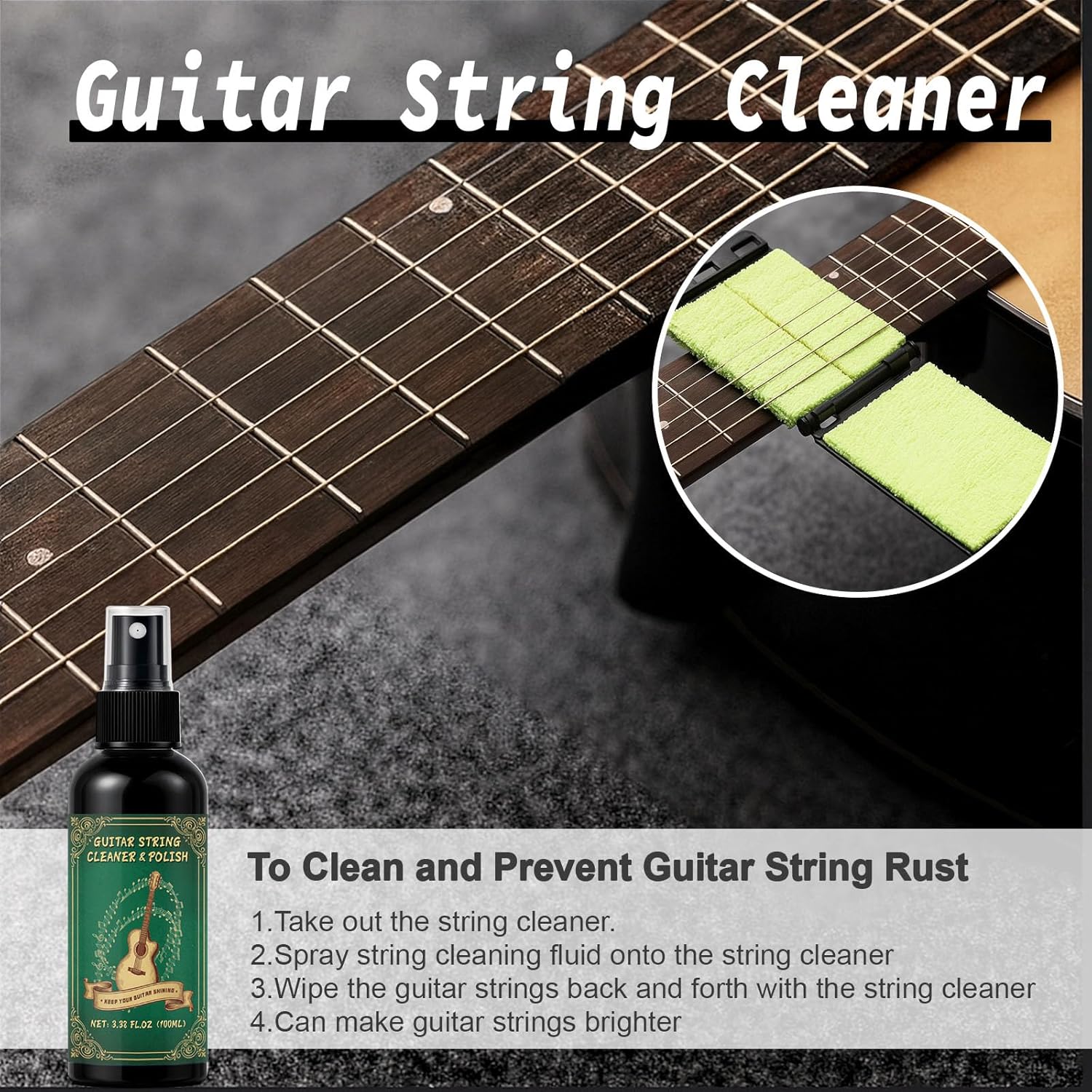
Occasional string cleaning.
Periodic fretboard attention.
Checking the instrument before putting it away.
These habits may seem insignificant individually.
Collectively, they help create a guitar that remains enjoyable to use month after month.
Many players find that having a dedicated guitar cleaning kit nearby makes these routines easier to maintain because everything needed is readily available.
Strings Experience More Wear Than You Think
Every time a guitar is played, the strings collect residue from the player’s hands.
This happens whether you’re practising scales, learning songs, recording ideas, or simply relaxing with a few favourite chords.
Over time, that buildup becomes part of the playing experience.
Many musicians discover that regular string care helps maintain a cleaner feel and keeps the instrument feeling more pleasant overall.
It’s not necessarily about extending the life of every string.
It’s about creating a guitar that feels ready whenever inspiration appears.
The Quiet Importance Of Fretboard Care
Fretboards rarely attract attention until they begin looking dry or dirty.
Yet they influence almost every aspect of the playing experience.
Your fingers spend countless hours moving across this surface.
Its condition contributes significantly to how comfortable the instrument feels.
Many guitar owners are surprised by how much fresher an instrument appears after a proper fretboard cleaning session.
The guitar still looks like the same instrument.
It simply looks cared for.
And there is a meaningful difference between those two things.
Comfort Often Comes From Small Details
Many players spend time searching for better gear, different accessories, or new equipment.
Sometimes the biggest improvements come from paying attention to what they already own.
A well-maintained instrument often feels more enjoyable without changing anything fundamental about the guitar itself.
Building A Collection That Lasts
Not every player owns multiple instruments.
But many eventually do.
An acoustic guitar.
An electric guitar.
Perhaps a bass or ukulele.
As collections grow, maintenance becomes increasingly important.
Simple care routines help ensure every instrument remains ready for use rather than slowly deteriorating through neglect.
For musicians who enjoy owning several instruments, having one maintenance solution that supports multiple stringed instruments often simplifies the process.
Why Maintenance Can Be Surprisingly Enjoyable
Many people view guitar care as another task on a long list of responsibilities.
Yet experienced players often see it differently.
Maintenance sessions can be relaxing.
They provide an opportunity to slow down and spend time with the instrument outside of active practice.
Some players clean their guitars while listening to music.
Others include maintenance as part of a regular weekend routine.
The process becomes less about chores and more about appreciation.
It’s a different way of engaging with the hobby.
Thinking In Years Rather Than Months
One of the most satisfying aspects of guitar ownership is longevity.
Unlike many modern products, guitars are designed to remain useful for years.
Sometimes decades.
The longer you keep an instrument, the more valuable regular maintenance becomes.
Not because you’re trying to preserve resale value.
Not because you’re trying to keep it looking untouched.
Because you want the guitar to remain enjoyable.
Many players find that a consistent care routine helps support exactly that goal.
Suitable For Every Stage Of The Journey
Long-term care isn’t reserved for experienced musicians.
In fact, beginners often benefit the most from establishing good habits early.
A new player who learns basic maintenance from the start may find guitar ownership less intimidating over time.
Returning players often enjoy refreshing instruments that have spent years in storage.
Hobby musicians appreciate keeping favourite guitars in reliable condition.
More experienced players understand that maintenance simply becomes part of responsible ownership.
The specific reasons may vary, but the benefits remain remarkably similar.
FAQ
How often should a guitar receive maintenance?
The answer depends on how frequently the instrument is played. Light cleaning can be performed regularly, while deeper maintenance sessions are often done periodically throughout the year.
Is a guitar cleaning kit only useful for expensive instruments?
No. Many players maintain affordable guitars just as carefully as premium models because the goal is enjoyment and longevity rather than value alone.
Can maintenance help make a guitar feel more comfortable?
Many players believe regular care contributes to a more pleasant playing experience by helping keep strings, frets, and fretboards clean.
Is guitar care difficult for beginners?
Most basic maintenance routines are straightforward and become easier with experience.
Can the same maintenance products be used on multiple instruments?
Many guitar care kits are suitable for guitars, basses, and ukuleles, making them practical for multi-instrument households.
Why do experienced players care so much about maintenance?
Because they understand that small habits often have a significant impact over years of ownership.
Why Some Players Keep The Same Guitar For Years
The guitars that stay with us the longest are rarely defined by specifications alone.
They’re the instruments that become part of daily life.
The ones used to learn favourite songs.
The ones picked up during quiet evenings.
The ones that remain nearby whenever inspiration arrives.
Looking after an instrument doesn’t guarantee it will become a lifelong companion.
But it does help support the kind of ownership experience that makes long-term relationships with guitars possible.
For players who see their instrument as more than just another possession, regular care often feels less like maintenance and more like respect for something that continues to provide enjoyment year after year.
As an Amazon Associate I earn from qualifying purchases.
Take a closer look