
Finding Your Own Sound Without Filling a Room With Gear
As an Amazon Associate, we may earn from qualifying purchases. This comes at no extra cost to you and helps support our website.
Every Guitarist Eventually Starts Searching for Their Own Sound
Learning guitar often begins with imitation.
Most players start by learning the songs they love. They study favourite guitarists, copy riffs, chase familiar tones and try to understand what makes certain recordings sound so memorable.
There’s nothing wrong with that. In fact, it’s one of the most natural parts of becoming a musician.
Over time, however, something changes.
Many players reach a stage where they become less interested in sounding exactly like someone else and more interested in discovering what feels authentic to them.
That journey can take years.
It’s rarely about finding one perfect sound. Instead, it’s about exploring possibilities, understanding preferences and gradually building a musical identity that feels personal.
For guitarists who enjoy experimenting, modern modeling technology offers an interesting way to support that process by providing access to a huge range of sounds without requiring shelves full of amplifiers and pedals.
Why Tone Becomes More Important as You Improve
When beginners first pick up a guitar, most of their attention naturally goes toward learning chords, scales and basic techniques.
As confidence grows, players begin noticing something else.
The same phrase can feel completely different depending on the tone being used.
A simple blues lick played through a warm overdriven sound carries a different emotional weight than the same phrase played through a modern high-gain setup.
A clean amplifier model may highlight subtle dynamics.
A saturated distortion can encourage aggression and sustain.
A spacious reverb can transform straightforward chords into something cinematic.
Tone becomes another form of expression.
It isn’t simply about sounding good. It’s about communicating different musical ideas.
The Challenge of Exploring Sounds Traditionally
For decades, exploring a wide range of guitar tones often required a significant investment of time, space and equipment.
Players collected pedals.
They upgraded amplifiers.
They experimented with cabinets.
They rearranged pedalboards.
While many musicians still enjoy that process, it can become complicated and expensive.
Not every player has room for multiple amplifiers.
Not everyone wants a growing collection of gear occupying valuable space.
For musicians who are more interested in playing than collecting equipment, having access to numerous amplifier and pedal models within a single unit offers a practical alternative.
The focus stays on creativity rather than logistics.
Building a Personal Sound Through Exploration
Finding a personal sound rarely happens overnight.
Most guitarists discover their preferences gradually.
One week they might become fascinated by vintage-style amplifiers.
The next week they may find themselves exploring heavier sounds.
Months later they may develop a love for ambient textures and expansive effects.
This exploration is valuable because it teaches players what they genuinely enjoy rather than what they think they should enjoy.
Access to a large collection of sounds encourages that experimentation.
The process becomes less about committing to one direction and more about remaining open to discovery.
Many musicians are surprised by which sounds ultimately become part of their regular playing routine.
Creating a Flexible Musical Environment
One of the advantages of modern guitar technology is flexibility.
Musicians often wear multiple hats.
You might spend one evening practising technique.
The next day could involve recording ideas.
The weekend may include rehearsing with friends.
Each situation benefits from different sounds.
A versatile modeling pedal allows players to adapt quickly without rebuilding an entire setup every time their musical focus changes.
For Solo Practice
Detailed amplifier and pedal models can make technical exercises feel more engaging.
For Songwriting
Different sounds often reveal ideas that might remain hidden when using the same setup every day.
For Recording Demos
Having immediate access to a wide range of tones helps maintain creative momentum.
For Rehearsals
Players can prepare sounds suited to different songs and musical situations.
Why Creative Curiosity Matters
Many experienced guitarists will tell you that curiosity is one of the most important skills a musician can develop.
Technique matters.
Knowledge matters.
Experience matters.
Curiosity keeps everything moving forward.
Exploring new sounds often leads to unexpected discoveries.
A player searching for one type of tone may stumble across something entirely different that inspires new riffs or songwriting ideas.
Those moments frequently become creative turning points.
The sound itself may not be the final destination.
The ideas it inspires often are.
Making the Most of Home Playing Time
Most musicians spend far more time playing at home than performing on stage.
Because of that, the home playing experience has a huge influence on long-term enjoyment.
A setup that encourages experimentation can make ordinary practice sessions feel more rewarding.
Instead of switching on the guitar and immediately falling into familiar habits, players can start each session with a sense of curiosity.
What happens if I try a different amplifier?
What if I combine effects in a new way?
What kind of music does this sound inspire?
Those questions keep practice engaging.
The guitar becomes something you want to pick up rather than something you feel obligated to practice.
Exploring Complete Guitar Rigs
One particularly interesting aspect of modern modeling systems is the ability to explore complete guitar rig concepts.
Rather than simply providing individual effects, some systems allow players to experience combinations of amplifiers, pedals and cabinets working together.
This broader perspective can help musicians better understand how great tones are built.
Instead of focusing on isolated components, players begin hearing how the entire signal chain contributes to the final result.
That knowledge often improves decision-making when creating personal sounds in the future.
The Role of Technology in Musical Expression
Technology sometimes receives criticism for making things easier.
In reality, its value often comes from making creativity more accessible.
The goal isn’t to replace musicianship.
The goal is to remove unnecessary obstacles.
When players spend less time managing equipment, they gain more time to focus on music.
When experimenting becomes easier, exploration happens more often.
When exploration happens more often, creativity tends to flourish.
Modern modeling technology works best when viewed as a tool that supports musical expression rather than replacing it.
The ideas still come from the player.
The technology simply provides more ways to bring those ideas to life.
Growing With Your Musical Interests
Musical tastes rarely stay fixed forever.
A guitarist who currently enjoys classic rock may develop an interest in blues, fusion, progressive music or ambient soundscapes later on.
That evolution is part of the fun.
Having access to a broad collection of sounds makes it easier to follow those changing interests without constantly rebuilding a rig from the ground up.
The gear grows alongside the player.
New inspirations can be explored whenever they appear.
That flexibility helps support long-term enjoyment and musical growth.
Conclusion
Developing a personal guitar sound is one of the most rewarding parts of being a musician. It encourages experimentation, builds confidence and helps players create a deeper connection with their instrument.
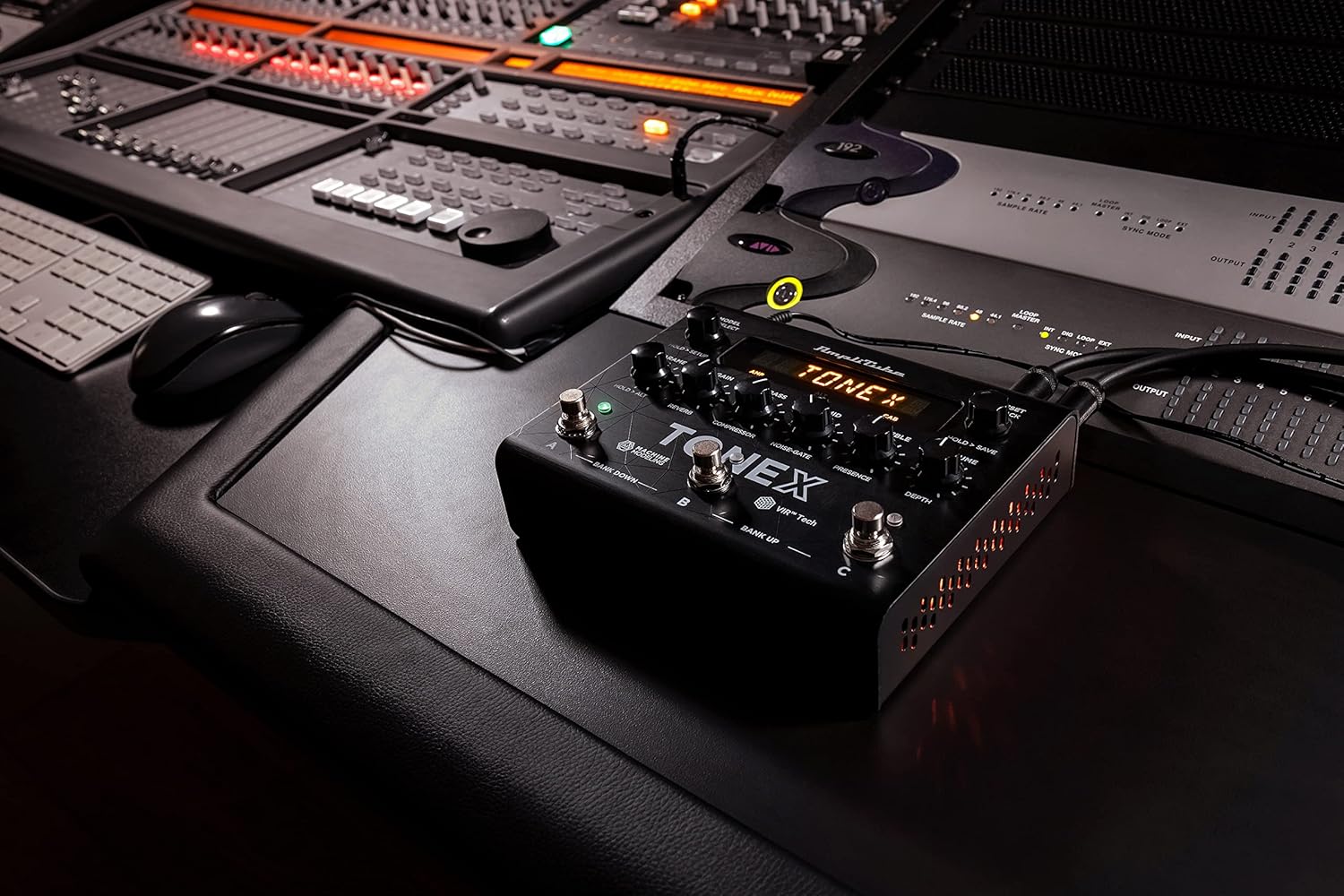
A guitar effects modeling pedal can fit naturally into that journey by providing access to a huge variety of amplifier, pedal and complete rig sounds within a single setup. Whether you’re practising at home, writing songs, recording ideas or simply exploring new musical directions, the ability to experiment freely can make the process of finding your own sound both enjoyable and inspiring.
For many guitarists, the search for the perfect tone never truly ends. That’s part of what makes the instrument so fascinating in the first place.
As an Amazon Associate I earn from qualifying purchases.
Take a closer look