
Squier Classic Vibe ’60s Jazz Bass
As an Amazon Associate I earn from qualifying purchases.
The Squier Classic Vibe ’60s Jazz Bass combines traditional Fender-inspired styling with the versatility that has made the Jazz Bass design popular across generations of musicians.
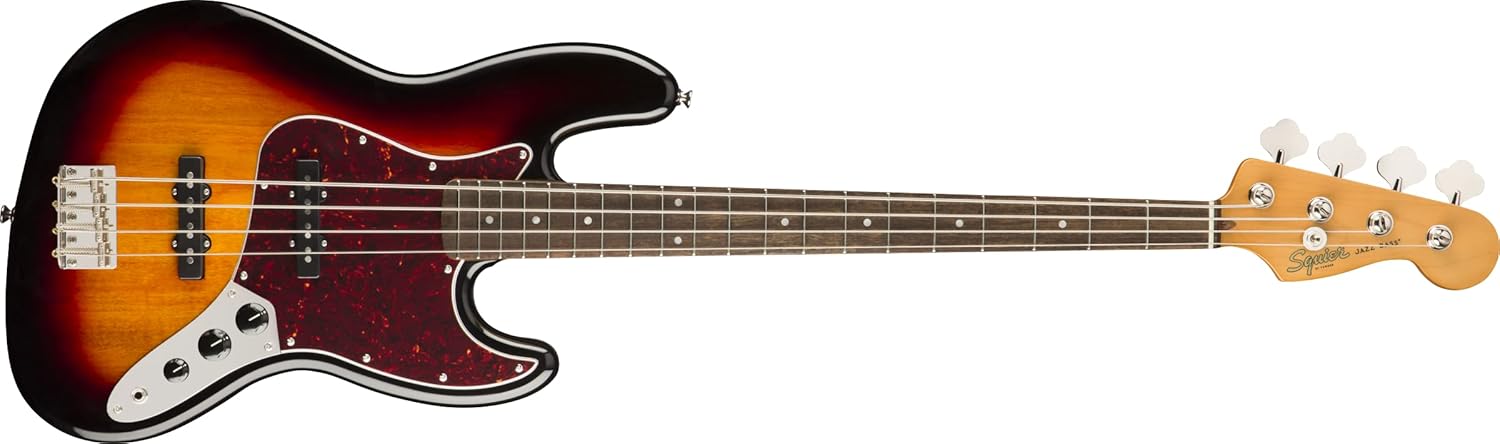
Finished in 3-Colour Sunburst, this four-string bass features a poplar body, maple neck, Indian laurel fingerboard and two Fender-designed Alnico single-coil pickups.
Its slim C-shaped neck, narrow 38.1mm nut and familiar control arrangement make it particularly interesting for players who appreciate classic bass construction without unnecessary electronics.
The design draws inspiration from the 1960s, but its 9.5-inch fingerboard radius and narrow-tall frets provide a slightly more contemporary playing arrangement.
However, traditional single-coil pickups can introduce electrical hum, the gloss neck finish will not suit everyone, and a full-scale bass can feel demanding to smaller players.
For musicians who want a recognisable Jazz Bass sound with straightforward controls and attractive vintage styling, the Classic Vibe ’60s deserves consideration.
Why It Works as an Everyday Bass
The Jazz Bass design has remained popular because it combines distinctive playing characteristics with a useful range of sounds.
Its offset body shape, two pickups and relatively narrow neck distinguish it from many other bass guitars.
The Squier Classic Vibe ’60s follows this familiar arrangement.
Instead of introducing complicated active electronics, it uses conventional passive pickups and simple physical controls.
That makes it easy to understand what each adjustment does.
The bass can provide rounder, fuller sounds for supportive rhythm playing or a more defined character when additional clarity is required.
This flexibility suits musicians playing rock, blues, funk, soul, pop and jazz.
It also makes the instrument useful for home recording, where different arrangements may require different bass tones.
The Classic Vibe is particularly appealing to players who want an instrument that concentrates on the fundamentals rather than an extensive collection of additional features.
What It Feels Like to Play
Neck comfort is one of the most important considerations when choosing a bass guitar.
The Classic Vibe ’60s uses a slim C-shaped maple neck with a 38.1mm nut width.
That is relatively narrow for a full-scale bass and may appeal to guitarists moving to bass for the first time.
The fingerboard has a 9.5-inch radius, providing a familiar balance between comfortable fretting and practical playing across the strings.
The Laurel Fingerboard
Indian laurel gives the fingerboard a traditional dark appearance that complements the Sunburst finish.
The instrument features 20 narrow-tall frets and white pearloid position markers.
The taller fret profile can provide a useful contact point when fretting notes and performing ordinary bass techniques.
However, the final playing experience will also depend on fret finishing, neck relief and string height.
A Full 34-Inch Scale
The 34-inch scale length provides the familiar string tension and playing dimensions associated with conventional electric bass guitars.
For experienced bassists, this should feel straightforward.
Beginners may need time to become comfortable with the distance between the lower frets.
Someone with smaller hands or limited reach may prefer a shorter-scale instrument.
Vintage-Tinted Gloss Neck
The neck has a tinted gloss urethane finish.
This gives it an attractive aged appearance consistent with the instrument’s 1960s inspiration.
Some players enjoy the smooth, glossy surface.
Others prefer a satin finish, especially during longer sessions when their hands become warm.
Neck finish is a personal preference worth considering before choosing any instrument.
Fender-Designed Alnico Pickups
The Classic Vibe ’60s Jazz Bass uses two Fender-designed Alnico single-coil pickups.
These follow the traditional Jazz Bass arrangement, with one pickup positioned near the neck and another closer to the bridge.
Each pickup has its own volume control, accompanied by a shared tone control.
There is no conventional pickup selector switch.
Instead, the player adjusts the balance between the two pickups.
Neck Pickup Character
The neck pickup generally produces a fuller, rounder sound.
This can be useful for blues, soul, traditional rock and bass lines that need to support the rhythm section without sounding excessively bright.
Reducing the tone control can soften the upper frequencies further.
Bridge Pickup Character
The bridge pickup generally offers greater definition and a more pronounced midrange character.
This can help individual notes remain clear during busier arrangements.
It may also appeal to funk and jazz players who want more articulation.
Blending the Pickups
One of the Jazz Bass design’s strengths is the ability to combine both pickups.
Rather than being limited to one or the other, musicians can find different balances between fullness and clarity.
The resulting sound will depend on the amplifier, playing technique and settings.
For a straightforward passive instrument, the two-volume arrangement offers a useful amount of tonal flexibility.
Classic Styling and Construction
The 3-Colour Sunburst finish is one of the most recognisable appearances associated with traditional electric bass guitars.
Combined with the tortoiseshell pickguard, black pickup covers and nickel-plated hardware, it creates an attractive vintage-inspired instrument.
The body is made from poplar with a gloss polyurethane finish.
Poplar is a practical body material, although it should not be assumed that the wood alone determines the amplified tone.
Pickups, strings, electronics and playing technique all have an important influence.
Vintage-Style Bridge
The bass uses a four-saddle bridge with threaded steel saddles.
Each saddle provides individual adjustment for string height and intonation.
The threaded design also allows some adjustment of string positioning.
This is a conventional and serviceable arrangement, although accurate setup is important for comfortable playing.
Traditional Tuning Machines
Vintage-style tuning machines complement the instrument’s appearance.
They provide a familiar method of adjusting string tension.
As with any bass, tuning stability depends on several factors, including string installation, the nut and the overall setup.
The Classic Vibe uses a bone nut, another traditional specification.
How It Compares With Other Bass Designs
The Jazz Bass is not the only practical choice for musicians seeking a straightforward four-string instrument.
Our Ibanez GIO GSR200 Bass Guitar article explores a different approach, combining P- and J-style pickups with an additional active bass-boost function.
The Squier concentrates more closely on traditional passive Jazz Bass sounds.
Another alternative is the Fender American Professional II Precision Bass, which uses a different pickup arrangement and neck design.
The Precision Bass and Jazz Bass each have distinctive playing characteristics.
Choosing between them is less about finding a universally superior instrument and more about deciding which neck, controls and sound suit the musician.
The Drawbacks
The Squier Classic Vibe ’60s Jazz Bass has several appealing features, but its traditional design also introduces limitations.
These deserve attention, particularly for someone buying their first serious bass guitar.
Single-Coil Pickups Can Produce Hum
Traditional single-coil pickups can pick up unwanted electrical interference.
This may become noticeable around certain lighting systems, electronic equipment and electrically noisy environments.
Using both pickups together can reduce hum under suitable conditions, but it does not guarantee completely noiseless operation.
Bassists who regularly play in demanding electrical environments may prefer a hum-cancelling pickup arrangement.
The Gloss Neck Will Not Suit Everyone
The vintage-tinted neck looks attractive, but the glossy finish is not universally popular.
Some musicians find gloss finishes comfortable.
Others prefer a satin surface that feels less sticky during long practice sessions.
This is especially relevant for players whose hands become warm while performing.
The appearance is appealing, but playing comfort should come first.
Factory Setup May Require Adjustment
A bass can have good specifications and still arrive needing attention.
String height, neck relief, pickup height and intonation influence its feel and sound.
Changes in temperature and humidity during storage or delivery may also affect the setup.
A professional adjustment may be worthwhile if the instrument arrives with excessive string height or unwanted fret buzz.
Beginners should not assume that an uncomfortable factory setup reflects their playing ability.
Limited Upper-Fret Range
The Classic Vibe ’60s has 20 frets.
That is sufficient for most conventional bass playing.
However, some modern bass guitars offer 22 or 24 frets, giving additional upper-register notes.
Players who frequently use extended melodic passages or advanced solo techniques may prefer a different neck design.
The Squier prioritises traditional construction rather than maximum fret access.
Full-Scale Dimensions Can Be Demanding
Although the neck is relatively narrow, this remains a full 34-inch-scale bass.
The distance between lower frets can require considerable finger stretching.
For smaller players, younger beginners or musicians accustomed to short-scale basses, the reach may initially feel uncomfortable.
A slim neck helps, but it does not change the instrument’s scale length.
Passive Electronics Offer Limited Tone Shaping
The two pickups provide useful variation, but the electronics remain straightforward.
There is no active multi-band equaliser, onboard bass boost or programmable switching.
Musicians who want extensive tonal adjustment directly from the instrument may find this restrictive.
Achieving more dramatic sound changes will depend on amplifier controls, pedals or other equipment.
For players who appreciate traditional simplicity, however, this limitation may actually be part of the appeal.
Vintage Hardware Is Not Especially Modern
The threaded-saddle bridge and conventional tuning machines suit the instrument’s appearance.
However, they do not provide every adjustment or convenience found on more modern bass hardware.
Players who frequently change tunings or use unusual string arrangements may prefer a different bridge design.
The hardware is practical, but it is deliberately traditional.
It Does Not Include a Case
Fender lists compatible cases and gig bags as separate accessories rather than standard included equipment.
Anyone transporting the bass to rehearsals, lessons or performances should consider suitable protection.
A padded gig bag may be convenient for ordinary travel, while a hard case offers greater protection against impacts.
A secure stand or case is also worthwhile for home storage.
It May Not Suit Heavier Modern Styles
The Classic Vibe can handle many musical styles, including rock and more aggressive playing.
However, guitarists and bassists who specifically want powerful humbuckers, active EQ or extended-range low notes may prefer a more modern design.
The Jazz Bass pickup arrangement has its own distinctive character.
It should not be expected to reproduce every sound associated with an active five-string or high-output humbucker bass.
Who It Suits Best
The Squier Classic Vibe ’60s Jazz Bass is particularly attractive to musicians who appreciate traditional bass styling and straightforward controls.
Its slim C-shaped neck and narrow nut may appeal to players moving from electric guitar to bass.
It also makes sense for bassists interested in blues, funk, soul, jazz, pop and classic rock.
The passive pickups provide enough tonal variation for practice, recording and general performance without introducing complicated electronics.
However, musicians seeking active tone shaping, an especially short scale or a completely modern playing design should consider alternatives.
Is the Squier Classic Vibe ’60s Jazz Bass Worth Considering?
The Squier Classic Vibe ’60s Jazz Bass combines familiar styling with practical specifications that remain relevant to modern musicians.
Its Fender-designed Alnico pickups, comfortable neck dimensions and traditional controls give it a clear musical purpose.
The 3-Colour Sunburst finish, tortoiseshell pickguard and vintage-style hardware provide the appearance associated with classic Jazz Bass instruments.
Nevertheless, the single-coil hum, gloss neck finish and possible need for setup adjustments are worth considering.
For musicians who want an uncomplicated four-string bass with traditional sounds and appealing vintage character, the Classic Vibe ’60s offers a sensible combination of design and functionality.
Its strongest quality is not technological complexity, but the familiar versatility that has kept the Jazz Bass design popular for decades.
Explore more carefully selected instruments in our Bass Guitars collection.
As an Amazon Associate I earn from qualifying purchases.